Insights & knowledge
Engineering Knowledge That Endures
Hikvera believes specialist experience creates greater value when knowledge is shared.
Knowledge sharing
Technical insights, training, workshops and mentoring
Focused sessions can be tailored for owners, project teams, consultants, contractors and engineering professionals.
- Durability and service-life engineering
- Concrete and materials technology
- Sustainable materials, SCMs and lower-carbon concrete
- Structural forensics and diagnostic investigation
- Condition assessment and asset performance
- Repair, rehabilitation and life extension
- Specifications and performance requirements
- Lessons from deterioration, defects and failures
Technical illustrations
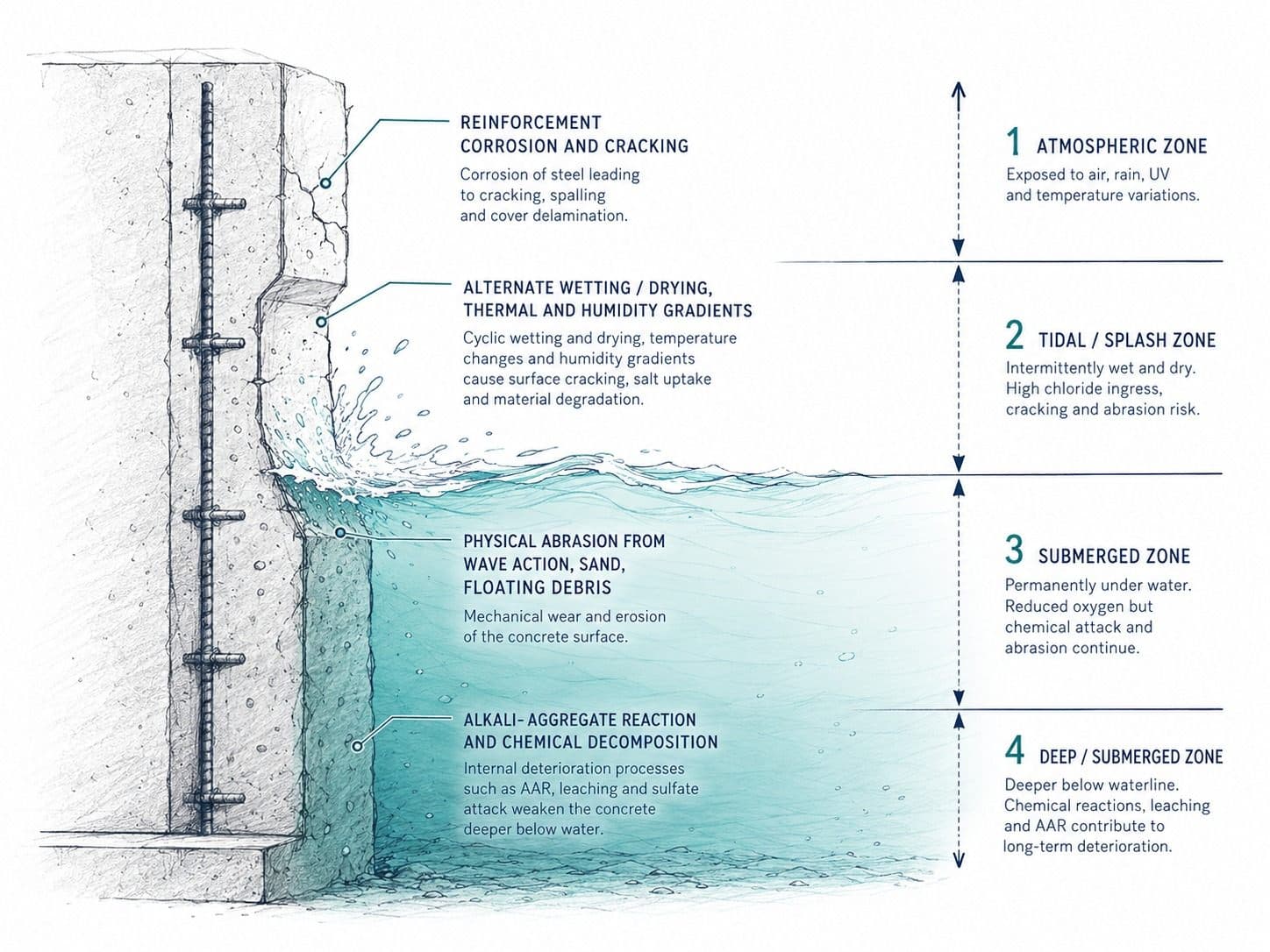
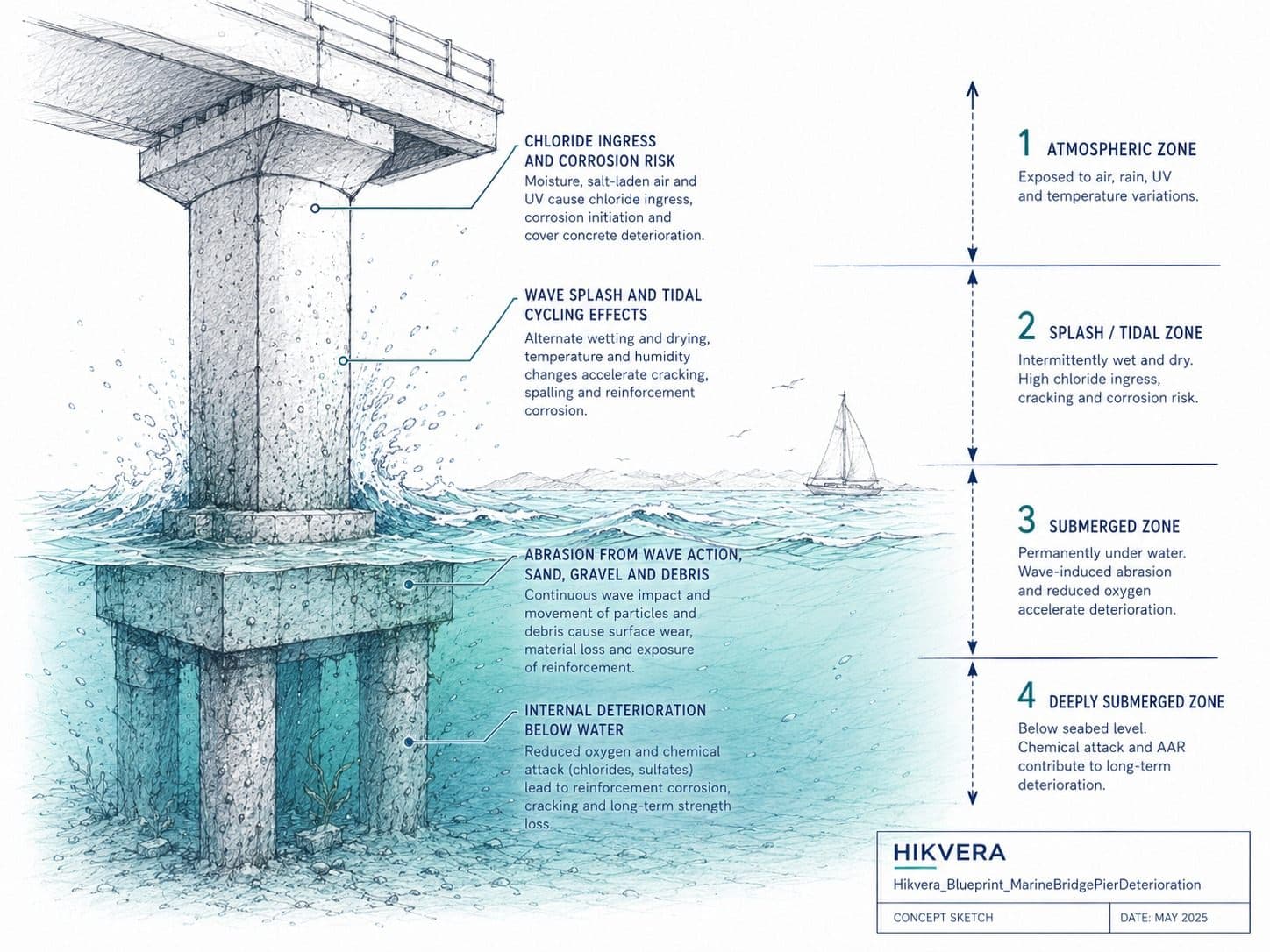
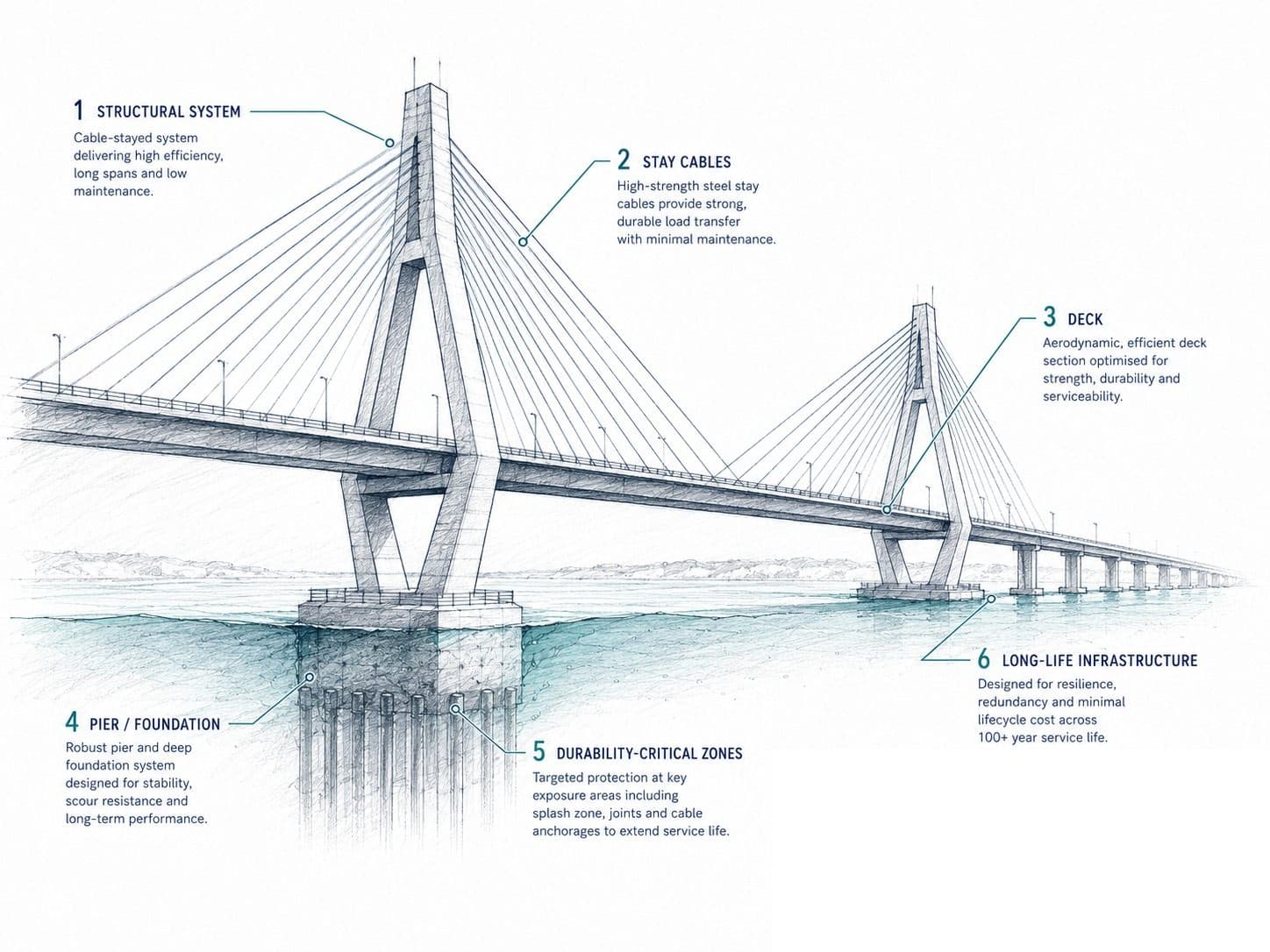
How exposure and deterioration are actually assessed
Concept sketches used to explain deterioration mechanisms, exposure zones and durability-critical detail to project teams and asset owners.
Sustainability
Sustainability Through Better Engineering
For Hikvera, sustainability is not an isolated service. It is part of sound engineering decision-making.
This includes consideration of SCMs and lower-carbon materials, local and alternative resources, durability, repair rather than premature replacement, rehabilitation, asset life extension, resource efficiency and lifecycle performance.
The balance that matters
A lower-carbon solution that does not achieve the required performance or service life may not deliver genuine whole-life sustainability.
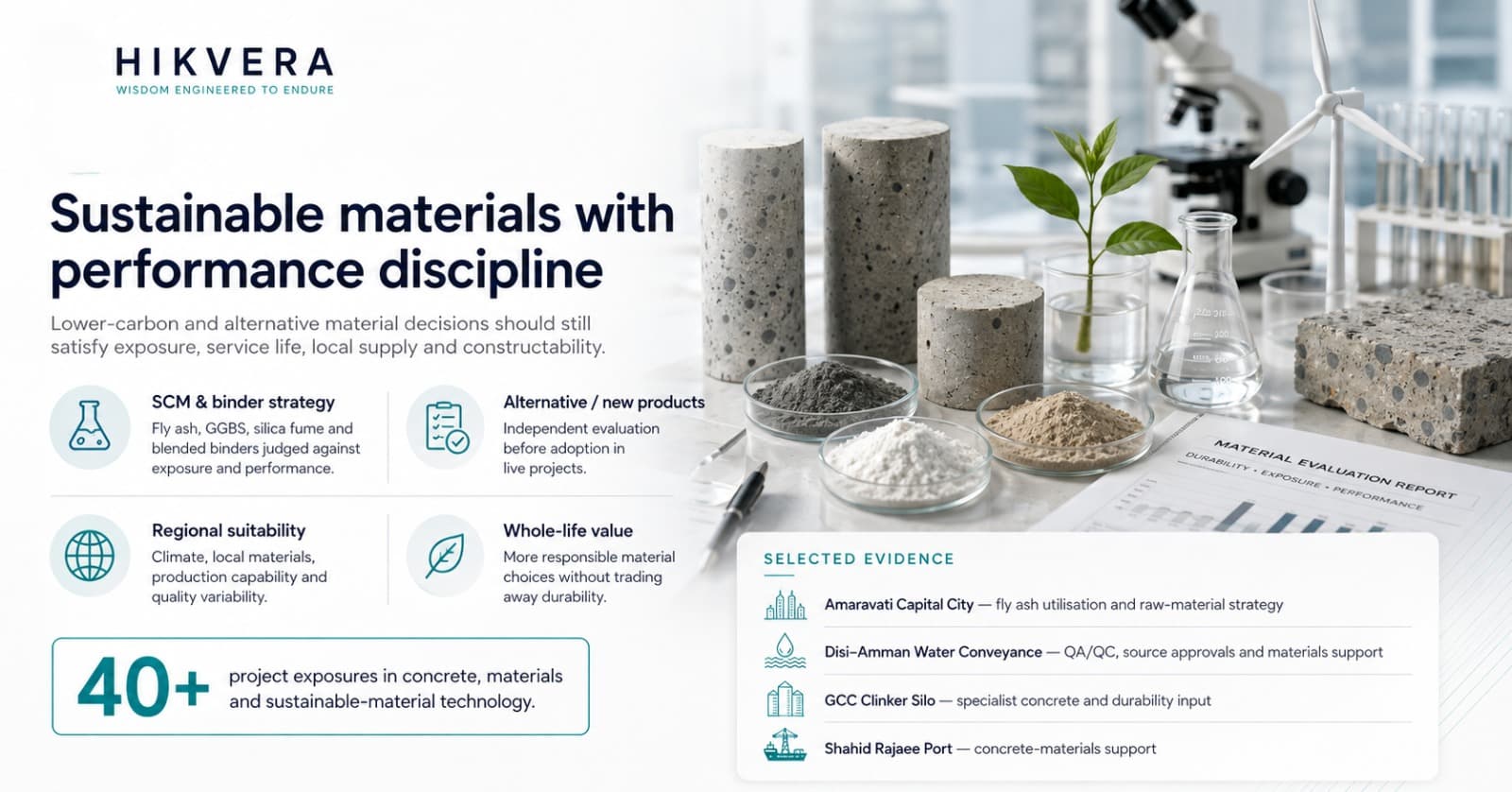
The objective is therefore to balance
- Environmental Responsibility
- Engineering Performance
- Durability
- Constructability
- Long-Term Value
Planning a technical session?
Focused sessions can be tailored for owners, project teams, consultants, contractors and engineering professionals.